Haut-Koenigsbourg Explained: The Complete Visitor’s Guide
I grew up in Sélestat, at the foot of the massif, and I’ve been up to the castle more times than I can count—on school trips by shuttle 500, on foot from Orschwiller, and with just about every friend who’s come to visit. Here’s what I tell them before they book anything.
This site is independent. It is neither the castle’s official website nor a tour operator. I compare the six day trips that go to Haut-Koenigsbourg and also explain what it’s like to visit on your own.
Why it looks so new
The first thing everyone says when they arrive in the car park is that the castle doesn’t look like a ruin. That’s because what you see mostly dates from 1900 to 1908. The rock is mentioned as early as 774 in a charter by Charlemagne, the Hohenstaufen castle is documented in 1147, it burns in 1462, the Thiersteins rebuild it after 1479 for artillery, and the Swedes burn it again in 1633. It then lies abandoned for over 250 years. In 1899, the town of Sélestat gifts the ruin to Kaiser Wilhelm II, who wants a symbol of the German Empire on his western border. He entrusts the project to Bodo Ebhardt, a young Berlin architect who studies the remaining walls, archives and other castles from the same period. Some of his choices remain debated: the keep is about 14 m taller than the original, and the roof of the banqueting hall is higher. The castle is inaugurated on 13 May 1908, passes to France in 1919, then to the département in 2007. I take it for what it is—a meticulous 1908 reconstruction. More details are on the history page.
The interior visit
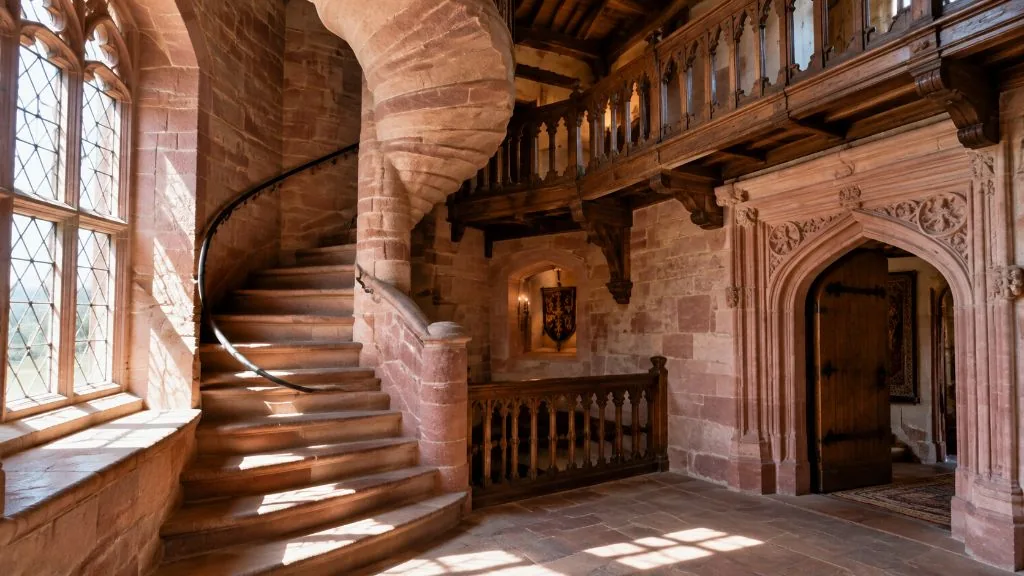
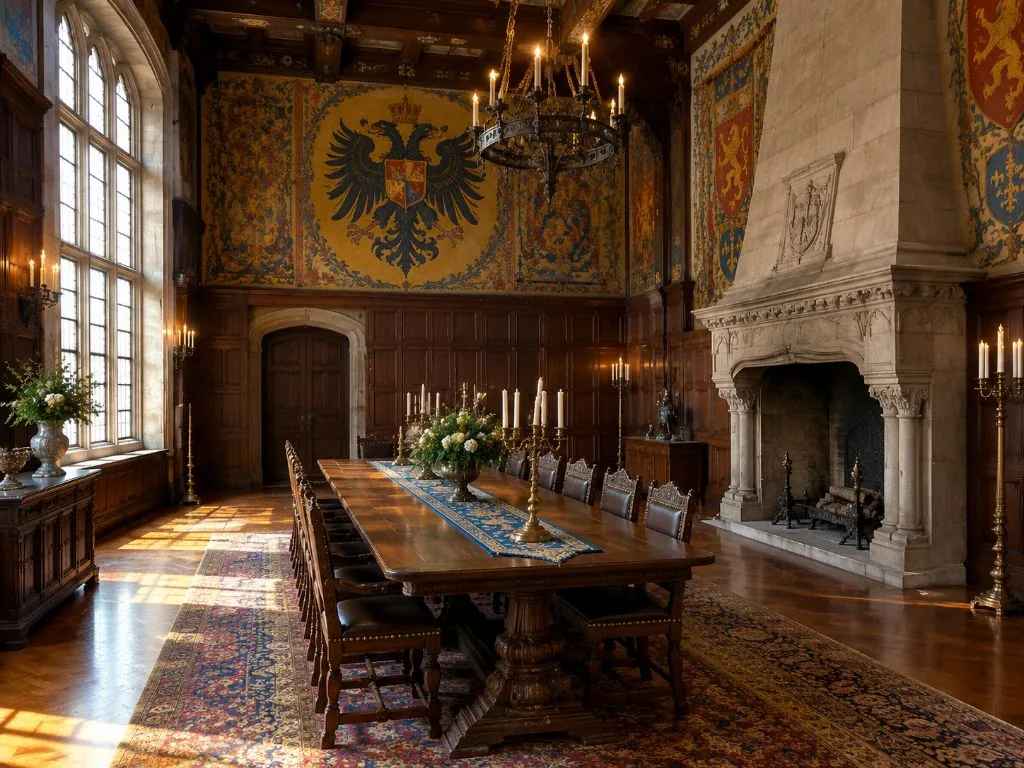
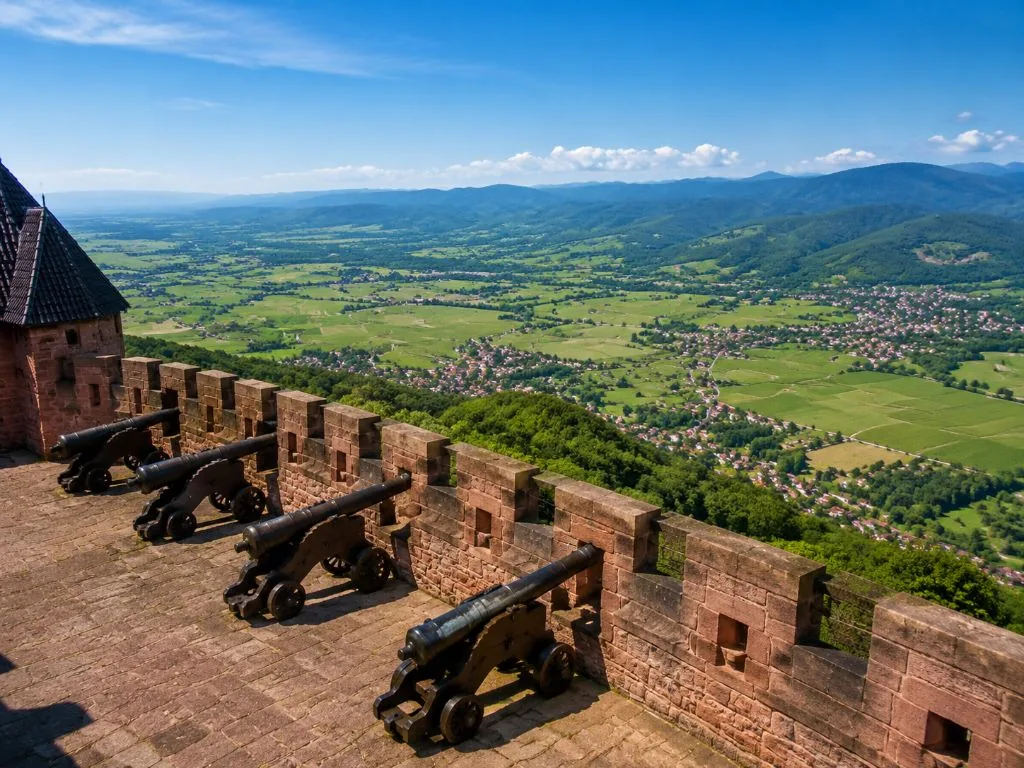
Allow one hour for the guided or self-guided tour, and two hours from the moment you park to when you leave. The one-way route takes you through the lower courtyard, the main gate and its drawbridge, spiral staircases, furnished apartments, the Lorraine Room, the banqueting hall, the armoury, the Kaiser’s Hall on the second floor, the keep and the great bastion, then the windmill, the medieval garden and the 62.5 m well. Around 300 uneven steps, which rules out strollers and makes the visit difficult in a wheelchair. Two things I always mention: the rooms are cold even in August, so bring a layer, and the view from the bastion (Alsace plain, Vosges, Black Forest, and the Alps on very clear days) is worth saving ten minutes for. My favourite room is still the Kaiser’s Hall, because it sums up Wilhelm II’s entire vision in one space. The room-by-room route is on what to see at the castle.
How to get up there
There’s no train station at the castle, and that’s the real issue. Three ways to get there. By car: A35, exits 17 or 18, mountain road, free parking for about 150 cars, then a 300 m uphill dirt path. By train: to Sélestat, then shuttle 500, which only runs in season, roughly from March to December; the bus ticket gives a discount on entry. That’s how I did my school trips—check the day’s schedule on the official website and plan your day around the bus. By excursion: someone else drives the mountain road, handles parking, and in many cases the ticket too, and you can combine it with visits to villages on the Wine Route. For most visitors staying in Strasbourg, Colmar or Basel without a car, this is the simplest option. The three options are detailed on opening times and access.
Choosing your excursion
Six excursions go up to the castle, and what sets them apart isn’t the programme—very similar from one to the next—but three key points. Guide or driver: on the small-group day trip from Strasbourg and on both departures from Colmar, someone provides commentary on the castle and villages; on the budget option from Strasbourg and the private tour, it’s a driver with an audio guide, and reviews from those who expected a guide make that clear. Group size: 8 seats in the vans, a panoramic coach with headsets in eleven languages from Colmar, or 4 people for a private tour. Castle entry: included on the coach departure from Colmar, the private tour and the departure from Basel, or purchased from the driver on the budget option. My advice: if you only have one day and want to understand what you’re seeing, go for the small group from Strasbourg. If you’re staying in Colmar, choose one of the two departures from Colmar—the van if you prefer a guide, the coach if you want hotel pickup. For families or if you have a train to catch in the evening, the private tour. The full comparison is on all tours.
When to go
From May to September for the light and the views, or in the morning to have the staircases to yourself. July and August, along with the weeks of the Christmas markets, are the busiest times, and the 8-seater vans often sell out several days in advance—Easter and long weekends are also busy. In winter, opening hours are shorter, with midday closures in November and December, but entry is free on the first Sunday of the month from November to March, and the castle hosts torchlit evenings by reservation. The castle closes on 1st January and 25th and 26th December; last entry is one hour before closing. All six excursions can be cancelled free of charge up to 24 hours in advance, so you can book early and change your mind if the weather turns. More details are on when to visit.
Ready to book?
For most visitors, the small-group day trip from Strasbourg is the simplest option: Colmar, Riquewihr, the Wine Route and a guided tour of the castle, with free cancellation up to 24 hours in advance. Read my detailed review or compare all tours.
Frequently asked questions
How long does it take to visit Haut-Kœnigsbourg?
Allow around one hour inside, whether you explore on your own or with a guide, and about two hours on-site between parking and departure. Details are on the how long the visit takes page.
Can you visit the castle without a car?
Yes: take the train to Sélestat, then bus 500 in season, or a day trip with a driver from Strasbourg, Colmar or Basel. See opening hours and access.
Which excursion should I choose for a first visit?
The small-group day trip from Strasbourg, which combines Colmar, Riquewihr and a guided tour of the castle. From Colmar, the excursion with a tasting includes the entry ticket. Compare on all tours.